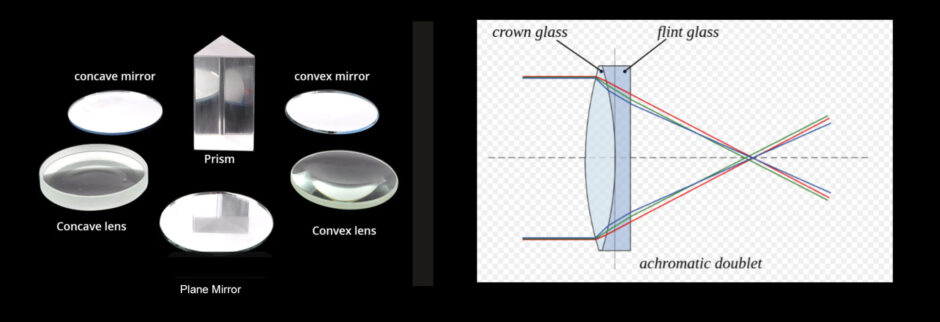
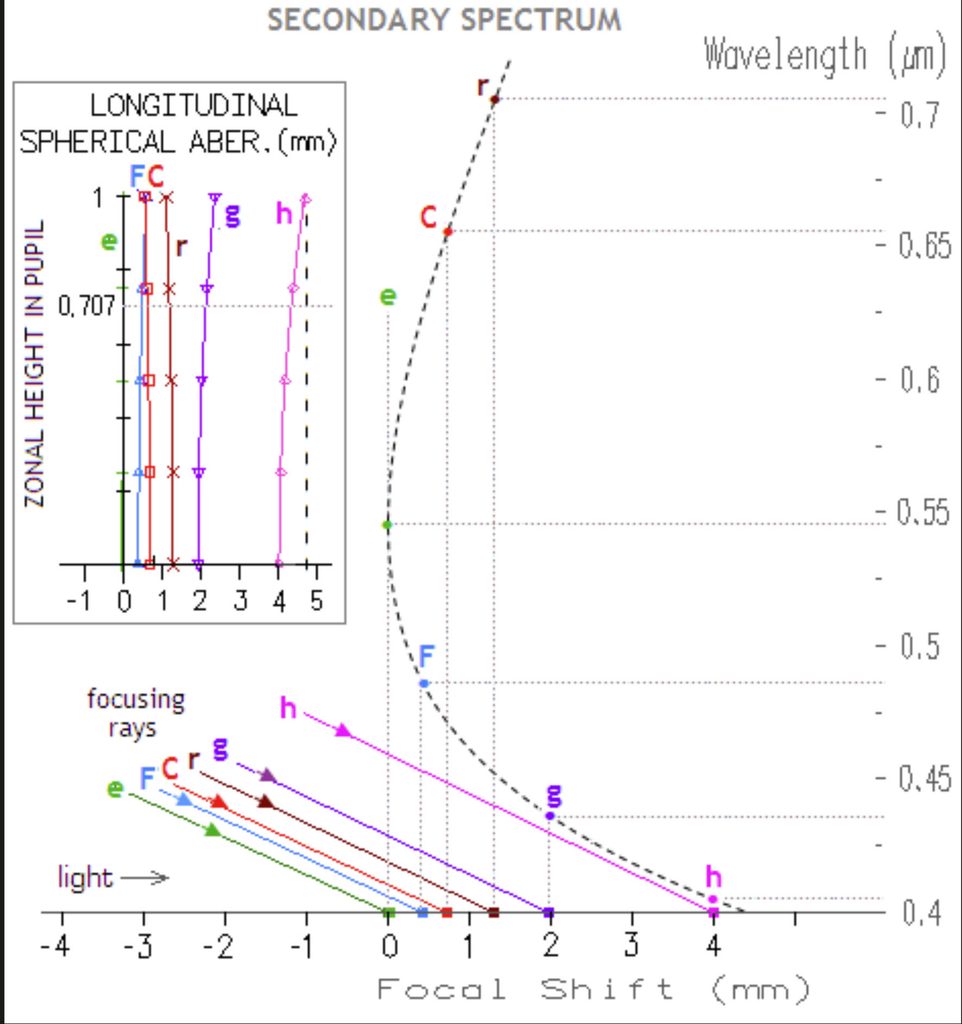
A typical achromatic lens is designed to bring together two wavelengths to a common focal point. When this condition is met there is yet a residual chromatic aberration known as secondary spectrum. It is illustrated in the diagram below excerpted from the excellent article from Amateur Telescope Optics at https://telescope-optics.net.
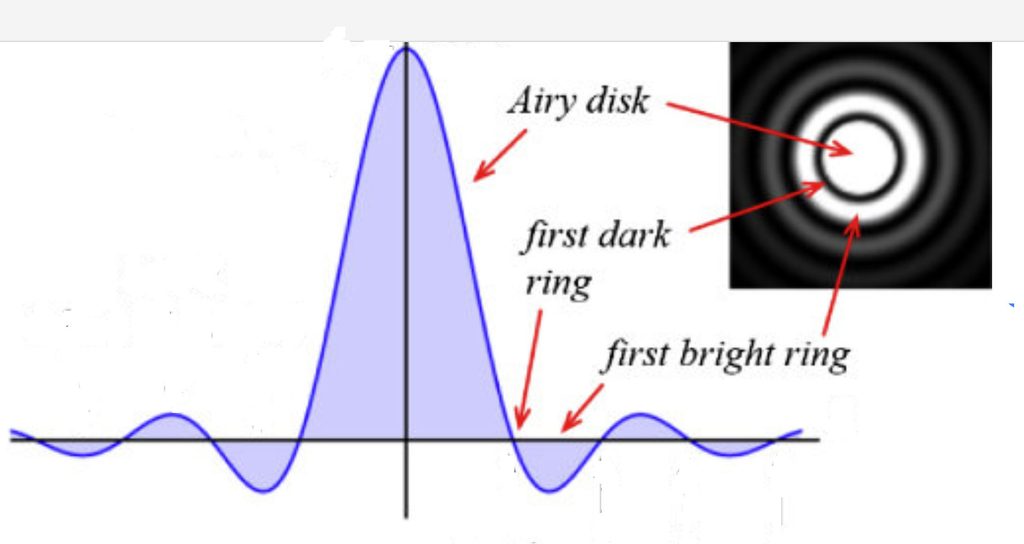
It results in an image spot size larger than the Airy disc of a diffraction limited imaging lens thereby limiting resolution.
The problem for submarine periscopes is especially bad since the aberration grows as relay lenses are added in the mast to transfer the image down the pipe.
The optical design of the periscope involves trade-offs, of which secondary spectrum is one variable as detailed in the 1974 SPIE paper “Periscope Design Trade-off Analysis”, available at https://doi.org/10.1117/12.954236..
As pointed out by Dr. Robert E. Hopokins who chaired the session in which I made the presentation, periscope secondary spectrum can be reduced just through a judicious configuration of the objective lens and relay lenses. .One example of the trade-off of secondary spectrum vs. periscope mast optics layout is detailed in the example presented on the page “Reduction via Lens Configuration”:.